Pool closing checklist
Freeze damage is not bad luck. It is water left somewhere it should not be, on the one night it mattered. Four groups, worked in this order, and the plugs stored where spring will find them.
Four groups, worked in this order. Freeze damage is almost always something on this list that was skipped in the dark at the end of a long day.
0/20
Chemistry, a week out
Balanced water sits still all winter; unbalanced water etches all winter.
Water level and lines
Every freeze failure traces back to water where it should not be.
Equipment
A heater that keeps a cup of water in the exchanger cracks it in one hard night.
Cover and site
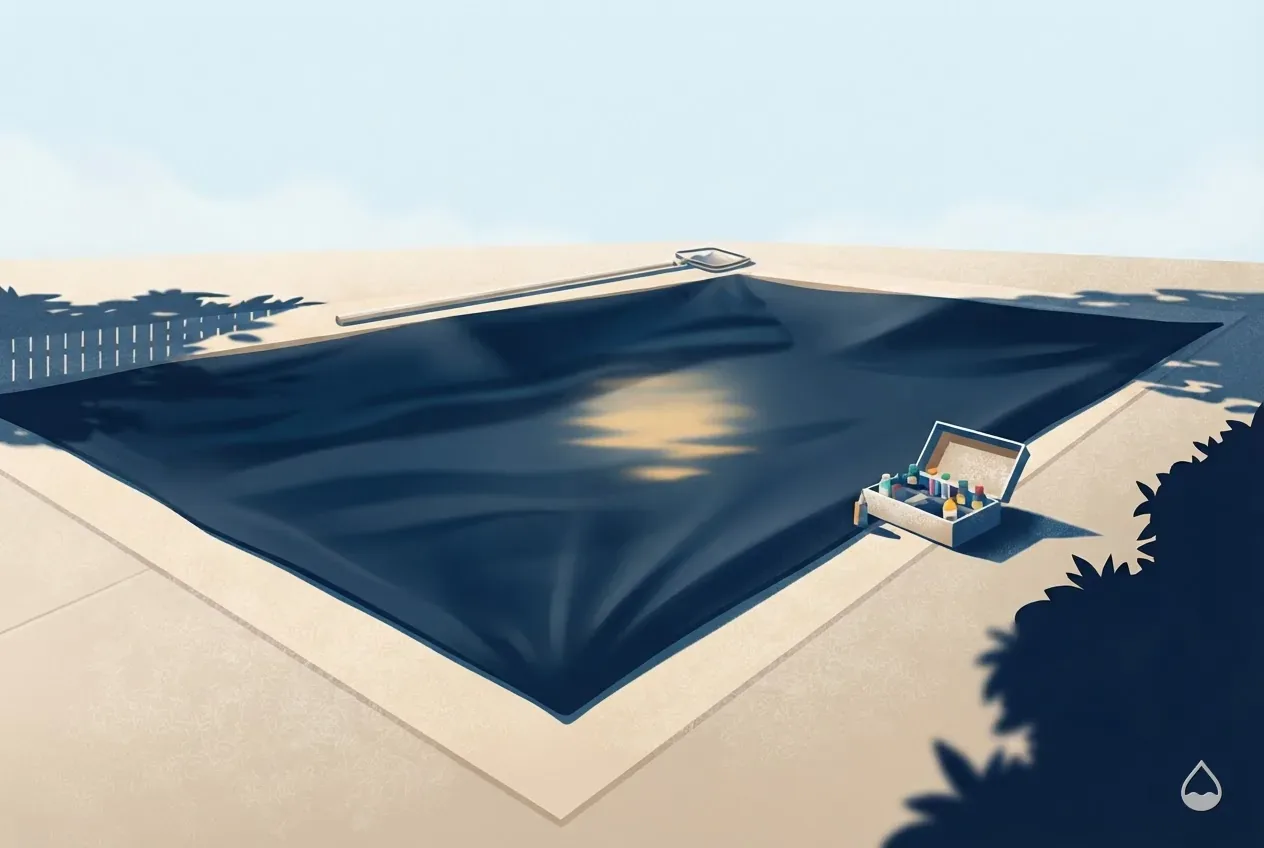
The cover is the whole point; a slack one is a leaf bag.
Balance a week early, not on the day
Corrections need circulation to work. Balancing the water on closing day means dosing a pool that is about to sit still for five months with chemicals that never fully mixed. Get alkalinity and pH in band a week out, verify on the day, and add the chlorine last.
The freeze list
| Component | What cracks | What stops it |
|---|---|---|
| Pump volute | Housing splits along the seam | Drain plugs out, basket empty |
| Filter tank | Base cracks, sand escapes | Drain plug out, valve to winterise |
| Heater exchanger | Copper tubes split | Both plugs out, gas off at the valve |
| Skimmer throat | Concrete cracks around it | Gizmo fitted, water lowered |
| Return lines | Pipe splits underground | Blown clear and plugged at the wall |
The manufacturer wins
Water level, plug locations and cover tension differ between makes and cover types. Where this list and the equipment manual disagree, the manual is the one that voids the warranty.
The cover is the product
Everything else on this list protects equipment; the cover protects the water. A slack cover collects leaves and rain, sinks in the middle, and hands you a green pool in April. Get the cover pump to the low point and tell the client to check it after storms — the cover comparison explains which types need that most.