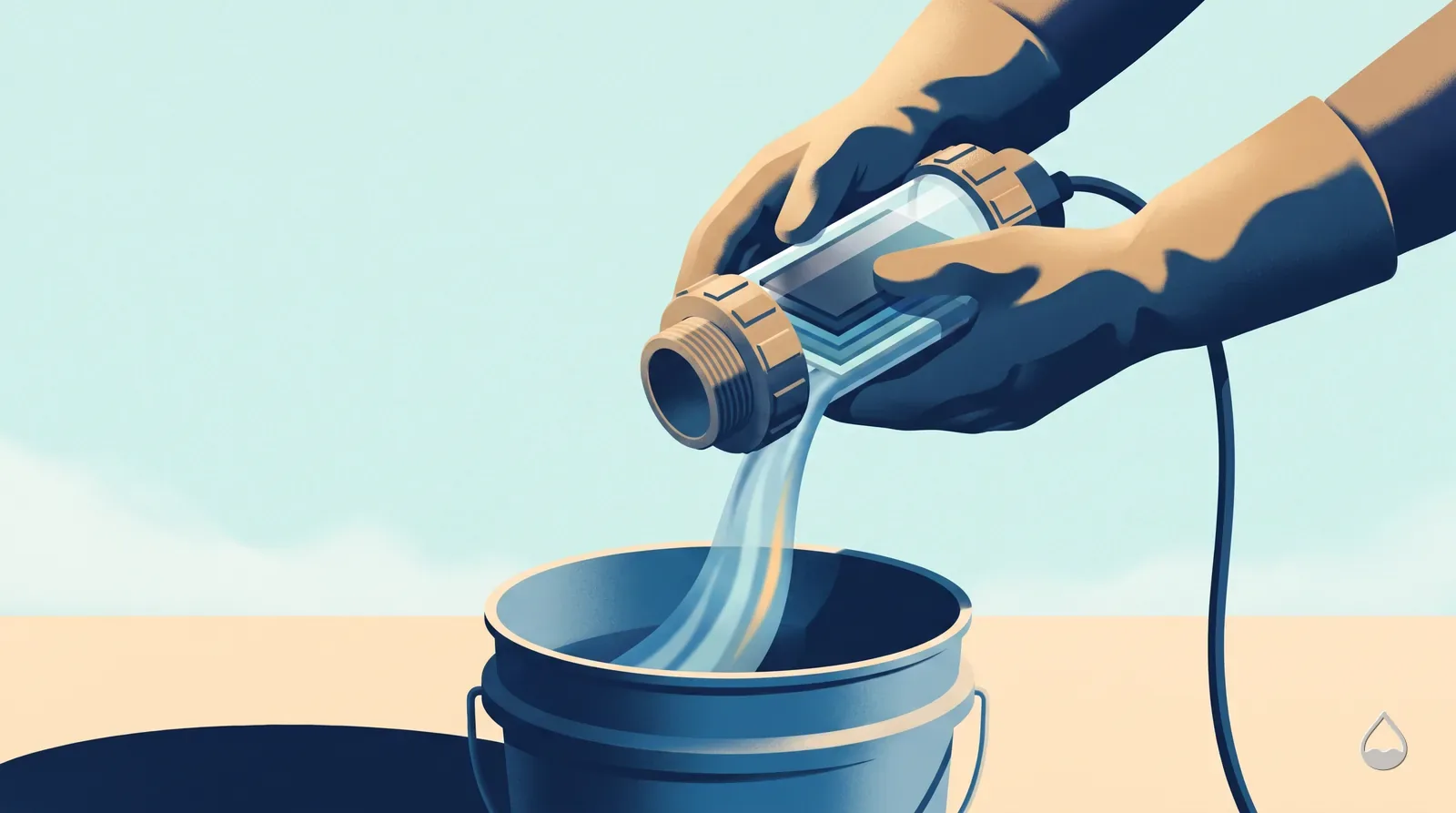
Why cells scale at all
Electrolysis raises pH at the plate surface no matter what the bulk water reads. In hard water, calcium precipitates onto the plates as scale, and scale is an insulator — the cell keeps drawing power and makes progressively less chlorine. The pool starts creeping down in free chlorine even though nothing about the routine has changed.
This is also why salt pools drift upward in pH generally, and why keeping pH inside the WHO band of 7.2 to 7.8 is not just about swimmer comfort on these systems: it is the main thing standing between you and a scaled cell.
When it actually needs cleaning
Inspect, then decide. Pull the cell, look down the plates with a torch, and only wash if you can see white crust bridging them. A calendar interval — “every three months” — costs you cell life for nothing, because every acid wash removes a little of the coating that makes the plates work.
A clean cell washed is a cell shortened
Acid does not distinguish between scale and the plate coating. If there is no visible scale, put it back and check again next month.
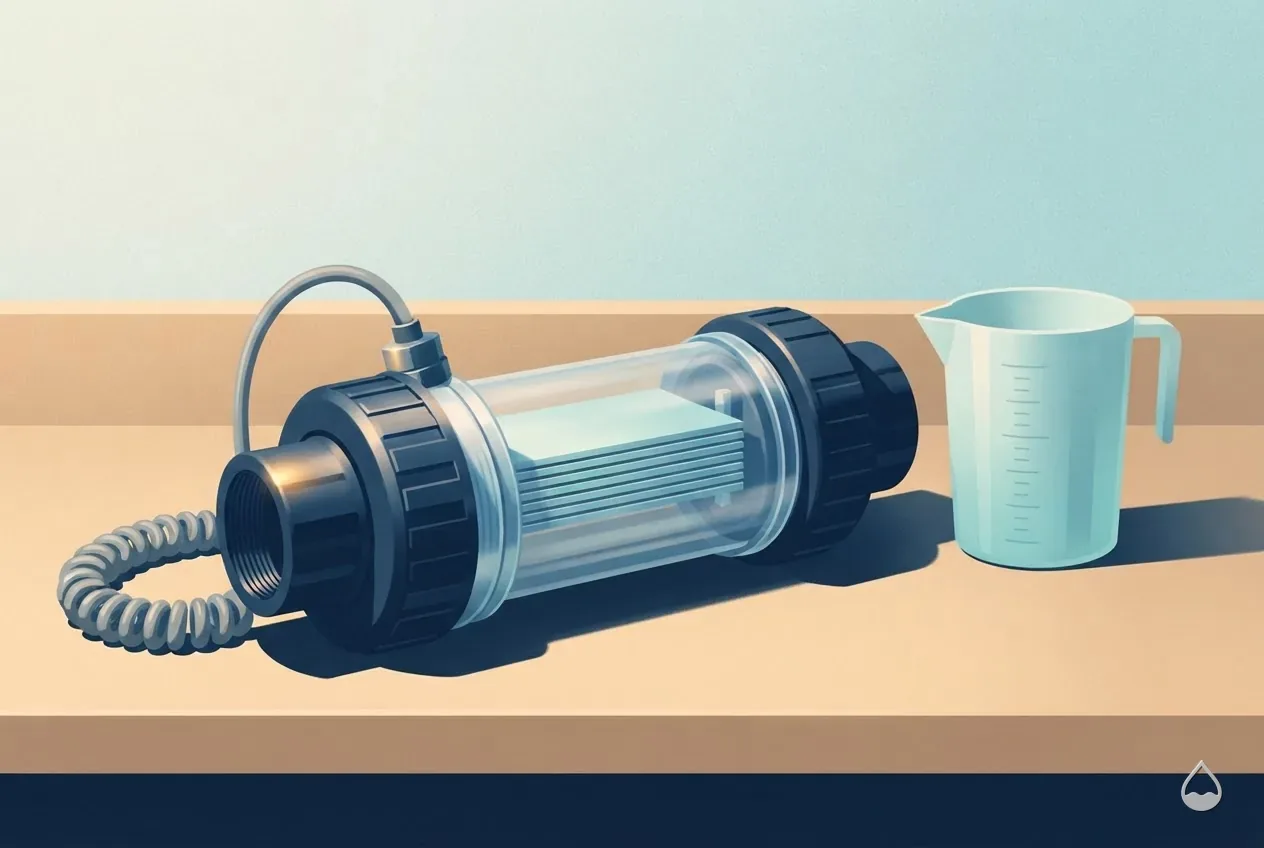
The wash, step by step
- Power off at the breaker, then remove the cell.
- Hose the plates first — some scale is loose and comes away with water alone.
- Mix one part muriatic acid into four parts water in a bucket or cell stand. Acid into water, always.
- Stand the cell in the solution so the plates are covered and the electrical end is not.
- Watch it fizz. Ten to fifteen minutes, or until the fizzing stops.
- Rinse thoroughly with fresh water, refit, restore power, and check the cell reports output.
Never leave a cell soaking “while you do the next pool”. That is how plates come back bare.
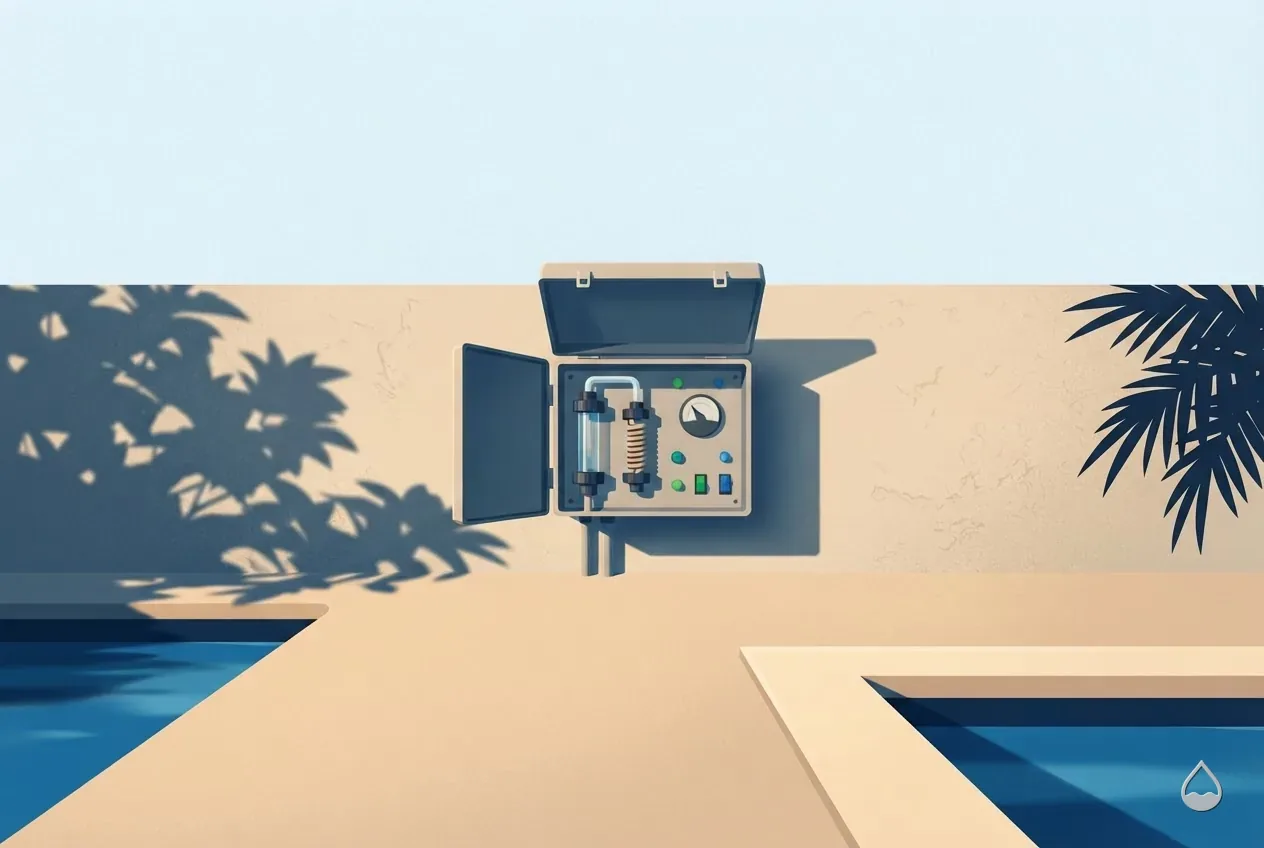
Scale versus a worn cell
A scaled cell recovers after a wash; a worn one does not. If the plates are visibly clean, salinity is at the cell’s target and output is still low, the cell has reached the end of its working life — they are consumables measured in operating hours, not years. Confirm salinity first with the salt calculator, because a low-salt pool produces exactly the same symptom for a fraction of the price.
Making cells last
Keep pH in band, keep salinity at the plate’s target rather than the top of the range, and inspect instead of scheduling washes. Those three habits do more for cell life than any product sold to protect them.