
There is no chemical shortcut
Cyanuric acid does not evaporate, does not burn off in sunlight and is not caught by any filter media. Products sold as CYA reducers work by binding it into a floc you then vacuum to waste — which is a slower, more expensive dilution with extra steps. For almost every pool, the answer is water.
The WHO guidance is unambiguous about the ceiling: where chlorinated isocyanurates are used, cyanuric acid should not exceed 100 mg/L. Past that, free chlorine measured on a kit stops predicting how the pool behaves.
How much water to replace
The arithmetic is exact and pleasantly simple: the fraction of water you replace is the fraction of stabiliser you remove. Replace half the pool and 120 ppm becomes 60.
| From | To | Replace | 22,000 gal |
|---|---|---|---|
| 90 ppm | 50 ppm | 44% | 9,778 gal |
| 120 ppm | 50 ppm | 58% | 12,833 gal |
| 160 ppm | 50 ppm | 69% | 15,125 gal |
Check your fill water before you start. If the mains supply is hard, a large refill moves calcium hardness as well, and you will be balancing two readings, not one.
Draining without cracking anything
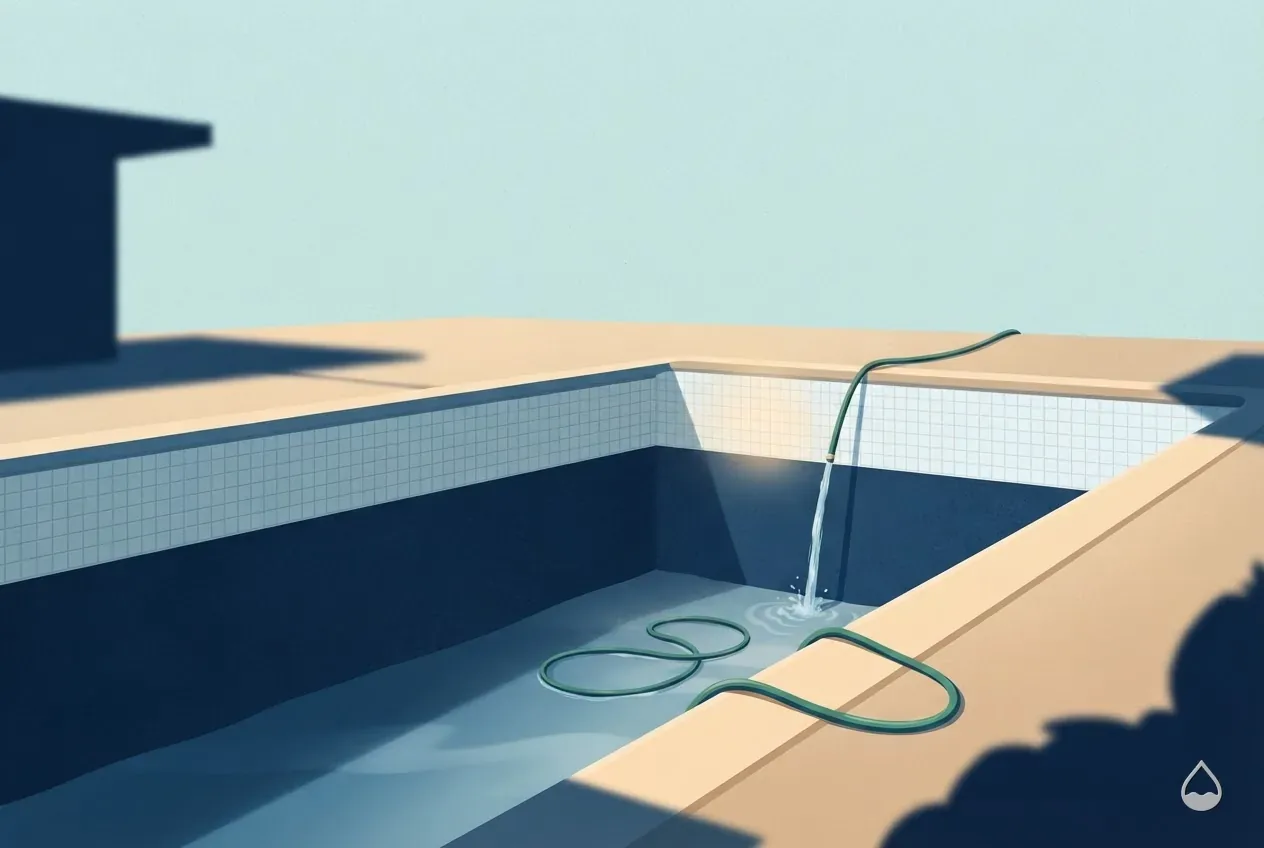
- Never empty a pool completely to fix chemistry. A drained shell can float on a high water table or crack in heat.
- Work in stages: drop a quarter, refill, circulate a full turnover, re-test, repeat.
- Keep the pump off while the water is below the skimmer — a dry-run pump is a dead pump.
- Watch where the waste goes. Storm drains are illegal to discharge to in many places; sanitary sewer clean-outs usually are not.
- Re-balance alkalinity and pH afterwards. Fresh water arrives with its own numbers.
Do not swim
Between the drain and the re-balance the pool has diluted sanitiser and unsettled chemistry. Keep it closed until a full test reads in band.
Stopping it coming back
A pool that needed this once will need it again in two seasons unless the chlorine source changes. Trichlor tablets add roughly 0.6 ppm of CYA per ppm of chlorine delivered; dichlor adds about 0.9. Move the routine dosing to liquid chlorine or a salt cell and keep tablets for holidays, and the reading stops climbing. Set a monthly CYA test in the maintenance grid so it never surprises you again.